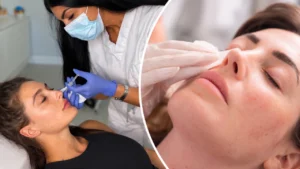

Quick answer: Dynamic wrinkles appear or become more noticeable when you smile, frown or raise your eyebrows. Static wrinkles remain visible even when your face is relaxed. Both can develop as your skin ages, but they do not always respond to the same treatments. Understanding whether facial movement, skin quality or deeper structural changes are responsible can help you decide which approach may be suitable.
You might notice fine lines across your forehead when raising your eyebrows or small creases around your eyes when smiling. At first, these lines may disappear as soon as your face relaxes. Over time, some can become noticeable even when you are not making an expression.
This is where the difference between dynamic vs static wrinkles becomes important.
Although both are common signs of facial ageing, they develop through a combination of different processes. Understanding what causes them can help you make more informed decisions about skincare, professional treatments and what results are realistic.
What Is the Difference Between Dynamic and Static Wrinkles?
The main difference between dynamic and static wrinkles is whether they remain visible when your facial muscles are relaxed.
Dynamic wrinkles develop through repeated facial expressions. They become more noticeable when the muscles beneath your skin contract, such as when you smile, squint or frown.
Static wrinkles remain visible when your face is at rest. They are influenced by changes in collagen, elastin, skin hydration and the effects of ageing and sun exposure. Some begin as dynamic lines before becoming more established.
| Feature | Dynamic Wrinkles | Static Wrinkles |
|---|---|---|
| When they appear | During facial movement | Remain visible at rest |
| Main contributing factors | Repeated muscle contractions | Skin ageing, repeated movement and sun damage |
| Common areas | Forehead, between eyebrows and around eyes | Forehead, around eyes and other facial areas |
| Appearance | Lines deepen with expression | Lines remain when muscles relax |
| Treatment considerations | Muscle movement and facial anatomy | Skin condition, wrinkle depth and underlying cause |
These categories can overlap. A forehead line may remain visible when your face is relaxed but become deeper when you raise your eyebrows.
According to DermNet’s guidance on facial wrinkles, repeated facial movement and changes within the skin both contribute to wrinkle development.
How Can You Tell Whether Your Wrinkles Are Dynamic or Static?
One way to understand the difference is to notice how your facial lines change with expression.
Look at your face while it is relaxed, then smile, frown or raise your eyebrows. If a line appears mainly during movement, it is likely to have a dynamic component. If it remains visible afterwards, it may also have a static component.
This is only a general observation. A professional assessment is needed to understand what contributes to individual facial lines.
Forehead Lines When Raising Your Eyebrows
Horizontal forehead lines commonly appear when you raise your eyebrows.
The frontalis muscle lifts your eyebrows and moves the skin across your forehead. As this happens, temporary creases form.
In younger skin, these lines may disappear almost completely when the eyebrows relax. As the skin changes with age, some forehead lines can remain visible without movement.
If you notice forehead lines at rest, the cause may involve both repeated facial expressions and changes in skin elasticity.
This distinction matters because improving skin hydration alone may not address a deeper line that has developed over time.
Frown Lines Between the Eyebrows
Frown lines are the vertical creases that develop between your eyebrows when concentrating, squinting or frowning.
They are sometimes called glabellar lines.
These creases are associated with movements involving the corrugator supercilii and procerus muscles.
Initially, the lines may only appear when you bring your eyebrows together. Over time, they can become more noticeable even when your expression is neutral.
People sometimes worry that these lines make them look tired or unhappy when they are simply resting their face.
However, the depth of frown lines varies considerably. Not everyone with visible lines needs or wants professional treatment.
Crow’s Feet When Smiling or Squinting
Crow’s feet wrinkles appear around the outer corners of the eyes.
They are associated with movement of the orbicularis oculi muscle, which helps close the eyelids and contributes to expressions such as smiling and squinting.
These lines are a normal part of facial expression. They can become more noticeable as the surrounding skin loses some elasticity.
The skin around the eyes is relatively thin, so changes in texture and hydration may also be visible in this area.
Some people have crow’s feet only when smiling, while others notice fine creases even when their face is relaxed.
Why Do Dynamic Wrinkles Become Visible Even When Your Face Is Relaxed?
Dynamic wrinkles can gradually develop a static component because the skin becomes less able to return to its original appearance after repeated movement.
When you are younger, the skin generally has greater elasticity. Collagen provides structural support, while elastin helps the skin stretch and recover.
With age, the quantity and organisation of these structural proteins change. Skin also becomes thinner in some areas and may hold less moisture.
Repeated expressions can contribute to creases becoming established as these changes occur.
Sun exposure is another important factor. Ultraviolet radiation contributes to photoageing, which damages skin structures and can make lines more noticeable.
Genetics, smoking and environmental exposure can also influence how facial wrinkles develop.
However, not every dynamic wrinkle will necessarily become a deep static wrinkle. The process varies according to individual anatomy, lifestyle and skin condition.
This is why age alone cannot determine the severity of someone’s wrinkles or which treatment may be appropriate.

What Treatment Options May Help Dynamic and Static Wrinkles?
The most appropriate approach depends on what is causing the lines and what you would like to improve.
Some people are concerned about movement related creases, while others notice fine surface lines or deeper folds that remain visible throughout the day.
These concerns should not automatically be treated in the same way.
When Facial Movement Is the Main Cause
When wrinkles appear mainly during expression, assessment should focus on the movement of the underlying facial muscles.
This includes looking at how the forehead moves, whether one eyebrow sits higher than the other and how lines change when you smile or frown.
Medical treatment options exist for certain movemen related wrinkles, but they require individual assessment of suitability, risks and expected results.
Not every line needs treatment. Your facial expressions are a normal part of how you communicate, and any decision should take your natural movement and preferences into account.
When Skin Texture and Elasticity Are the Main Concerns
Some static wrinkles are associated more strongly with skin quality than facial movement.
Fine lines may become noticeable as the skin loses hydration or develops a rougher texture. Reduced elasticity and cumulative sun exposure can also contribute.
Depending on the concern, appropriate skincare or selected professional skin treatments may help improve the appearance of the skin.
For example, treatments that focus on hydration or skin texture may be considered for certain superficial lines. However, they should not be expected to correct every established wrinkle.
An assessment should establish whether the concern is mainly dehydration, surface texture or a deeper structural change before treatment is considered.
When Deeper Folds Involve Facial Volume Loss
Not every facial fold develops because of repeated muscle movement.
As the face ages, changes in fat distribution, bone support and soft tissue can alter facial contours.
This may contribute to deeper folds around the mouth and changes in the lower face.
These structural concerns are different from forehead expression lines or crow’s feet.
A treatment intended to improve skin hydration may have little effect on a fold caused mainly by volume loss or tissue descent.
Understanding the underlying cause is therefore more useful than choosing a treatment simply because it is described as antiageing.
Can Fine Lines and Deep Wrinkles Be Completely Removed?
There is an important difference between improving the appearance of wrinkles and removing them completely.
Fine lines associated with dehydration may become less noticeable when the skin is properly moisturised. Certain professional treatments may also improve superficial texture.
Deeper static wrinkles are often more difficult to change because they may involve established changes in the skin’s structure.
The results of any treatment depend on the depth of the lines, their underlying cause, the chosen approach and individual response.
Complete wrinkle removal should not be assumed.
Natural facial movement also means that some lines will continue to appear when you smile, laugh or raise your eyebrows.
A realistic treatment plan should explain what improvement may be possible without promising permanently wrinkle free skin.
Can Skincare Help Prevent Wrinkles From Becoming More Noticeable?
Skincare cannot stop natural ageing, but some habits can help protect the skin and reduce avoidable damage.
Sun protection is particularly important because ultraviolet radiation contributes to premature skin ageing.
The NHS recommends sunscreen with at least SPF 30 and four star UVA protection, alongside shade and protective clothing.
A suitable moisturiser can also help the skin retain water. This may make fine dehydration lines less noticeable and improve overall skin comfort.
Some skincare ingredients, including certain retinoids, have evidence for improving aspects of photoaged skin. However, they are not appropriate for everyone and may cause irritation. Professional advice is important, particularly during pregnancy or when using prescribed skincare.
A consistent routine is often more useful than repeatedly changing products in search of quick results.
It is also worth remembering that dry skin and dehydrated skin are different concerns. Understanding your skin’s condition can help you choose skincare that addresses the actual problem rather than assuming every fine line needs an aesthetic treatment.
Understanding Your Wrinkles Before a Consultation in Poole
If you have noticed changes around your forehead, eyes or other facial areas, you do not need to know whether your wrinkles are dynamic or static before seeking advice.
At Kathleen Hughes Aesthetics, consultations provide an opportunity to discuss your facial concerns and understand which factors may be contributing to them.
An assessment may consider your skin condition, facial movements, previous treatments, medical history and the changes you would like to address.
For someone concerned about forehead lines, the discussion may focus on expression and how the lines appear at rest.
For another person, skin texture or facial volume changes may be more relevant.
Kathleen’s approach to first time aesthetics consultations begins with understanding your concerns rather than assuming a particular procedure is necessary.
A consultation should leave you with realistic information about your options, including when no treatment may be appropriate.
Frequently Asked Questions About Dynamic and Static Wrinkles
Can Dynamic Wrinkles Turn Into Static Wrinkles?
Yes. Dynamic wrinkles can gradually become visible at rest as the skin changes with age. Repeated facial movement, collagen changes and sun exposure may all contribute. However, not every expression line becomes a permanent crease. The process varies between individuals.
Why Do Forehead Lines Stay Visible When My Face Is Relaxed?
Forehead lines may remain visible because repeated eyebrow movement has contributed to established creases. Changes in collagen, elasticity and skin quality can also make them more noticeable. A professional assessment can help distinguish movement related lines from other changes affecting the forehead.
Are Crow’s Feet Dynamic or Static Wrinkles?
Crow’s feet can be either dynamic or static. Lines that appear mainly when smiling or squinting are dynamic. If they remain visible when your face is relaxed, they also have a static component. The skin’s condition and repeated movement both influence their appearance.
Can Skincare Improve Static Wrinkles?
Skincare may improve some fine static lines, particularly when dehydration or sun damage contributes to their appearance. Moisturisers can temporarily soften the appearance of fine lines, while certain active ingredients may improve photoaged skin over time. Deep wrinkles are unlikely to disappear through skincare alone.
Do All Facial Wrinkles Need Professional Treatment?
No. Wrinkles are a normal part of ageing and facial expression. Many people choose not to treat them. If a particular concern bothers you, a consultation can help explain its cause and whether skincare, professional treatment or no intervention would be appropriate.
Not Sure What’s Causing Your Facial Lines?
Forehead creases, frown lines and wrinkles around the eyes do not always develop for the same reasons. Understanding whether the changes involve muscle movement, skin quality or facial structure is an important part of deciding what to do next.
If you would like advice about your facial lines or wrinkles, contact Kathleen Hughes Aesthetics in Poole to arrange a consultation. You can discuss your concerns, ask questions and understand your options before deciding whether any treatment is right for you.