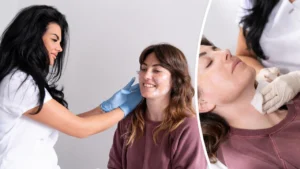

Dry skin and dehydrated skin can both feel tight, rough or uncomfortable, but they are not exactly the same. Dry skin is usually associated with insufficient natural oils and a weaker moisture barrier. Dehydrated skin is a common skincare term for skin that has lost too much water from its outer layers.
The distinction matters because the same product or aesthetic treatment will not necessarily be appropriate for both concerns. Your skin may also be dry and dehydrated at the same time.
Before choosing a professional treatment, it is important to consider your skin condition, current routine, medical history and any signs of irritation or inflammation.
Dry Skin vs Dehydrated Skin at a Glance
| Feature | Dry skin | Dehydrated skin |
|---|---|---|
| Main issue | Reduced oils or barrier lipids | Reduced water content |
| Classification | Skin tendency or clinical symptom | Temporary skin condition or description |
| Common appearance | Rough, flaky or scaly | Dull, tight or less plump |
| Can affect oily skin | Less commonly | Yes |
| Common feeling | Persistent dryness or itching | Tightness that may come and go |
| Can occur together | Yes | Yes |
| First priority | Support and protect the barrier | Improve hydration and reduce water loss |
| Professional treatment | Depends on the cause and skin condition | Depends on the cause and skin condition |
The terms are useful but they do not provide a medical diagnosis. Persistent or inflamed skin may require advice from a GP, pharmacist or dermatologist.
What Is Dry Skin?
Dry skin develops when the outer skin does not contain enough of the oils and lipids needed to remain soft and retain moisture.
In everyday beauty language, people often describe dry skin as a skin type. Some people naturally produce less sebum and regularly experience roughness or flaking.
However, dry skin is not always something you are born with. It can also become more noticeable with age, cold weather, low humidity, frequent washing, harsh products and certain skin conditions. Clinically, persistent dry skin may be called xerosis or xeroderma.
The skin may:
- Feel rough or tight
- Look flaky or scaly
- Become itchy
- Develop fine surface cracks
- Feel uncomfortable after washing
- React more easily to fragranced or active products
Dryness can affect the face, but it may also appear on the hands, legs, arms and other areas.
What Is Dehydrated Skin?
Dehydrated skin is a common term used in skincare and aesthetics to describe reduced water content within the outer skin.
Unlike a naturally dry skin tendency, dehydration can affect people with oily, combination or normal skin. Someone may notice shine or congestion while their skin still feels tight and uncomfortable.
Dehydrated skin may appear:
- Dull or tired
- Less smooth
- Tight after cleansing
- More sensitive than usual
- Uneven beneath make-up
- Marked by more visible surface lines
Skin hydration depends on the condition of the stratum corneum, which is the skin’s outer protective layer. Natural moisturising factors help attract water while lipids help limit water loss from the surface. When this system is disrupted, transepidermal water loss can increase.
The term dehydrated skin should not be used to diagnose dehydration throughout the body. General dehydration can have wider symptoms and requires appropriate medical advice when it is significant.
Can Your Skin Be Dry and Dehydrated at the Same Time?
Yes.
Skin that produces fewer natural oils may have more difficulty holding on to water. This means someone with a dry skin tendency may also experience temporary dehydration.
The reverse is also possible. Oily skin can become dehydrated following excessive cleansing, repeated exfoliation, unsuitable active ingredients or environmental exposure.
This is one reason why skin appearance alone cannot always tell you what your skin needs.
Applying a very rich moisturiser to every tight or dull complexion may not address the underlying issue. Adding more exfoliation can also make matters worse if the barrier is already irritated.
What Can Cause Dry or Dehydrated Skin?
Several factors can affect skin moisture and barrier function.
Weather and Indoor Environments
Cold air, wind, central heating and air conditioning can affect moisture levels at the skin surface. Dry air can increase the likelihood of roughness and discomfort.
Cleansing Habits
Long hot showers, repeated cleansing and harsh soaps can remove protective oils from the skin. NHS guidance recommends gentle washing and the use of suitable emollients for dry or scaly skin conditions.
Excessive Active Skincare
Retinoids, exfoliating acids and physical scrubs can be useful in suitable routines. However, using too many active products or using them too frequently may leave the skin irritated and less able to retain moisture.
Ageing
The skin’s natural oil production and barrier performance can change with age. This can make dryness, sensitivity and surface lines more noticeable.
Skin Conditions
Eczema, dermatitis, psoriasis and other skin conditions can cause dryness, itching or flaking. These should not be self-diagnosed as simple dehydration.
Medication and Health Factors
Some medicines and health conditions can affect the skin. Any relevant medical history should be discussed before an aesthetic procedure is considered.
Why Does the Difference Matter Before Aesthetic Treatment?
Professional treatments affect the skin in different ways.
A chemical peel intentionally exfoliates surface layers. Microneedling creates controlled microchannels to encourage a repair response. Injectable skin boosters and polynucleotides use different methods to address aspects of skin quality.
These treatments are not interchangeable and none should be selected solely because the skin looks dull or feels tight.
If the barrier is irritated, inflamed or damaged, a practitioner may recommend postponing a treatment that could create additional sensitivity. The first step may be to simplify the skincare routine and allow the skin to settle.
A consultation should consider:
- How long the symptoms have been present
- Whether the skin is itchy, painful or inflamed
- Which products are currently being used
- Previous treatments
- Medication and medical history
- Expected results
- The condition of the skin barrier
- Whether medical advice is more appropriate
Aesthetic treatment should not be used as a substitute for diagnosing or managing eczema, dermatitis, psoriasis or another medical skin condition.
Do Skin Boosters Treat Dry or Dehydrated Skin?
Skin boosters are commonly discussed when a client wants to improve the appearance of skin hydration and overall skin quality. They are not a replacement for a suitable daily skincare routine and they do not treat every cause of dry skin.
A person with persistent flaking, active inflammation or unexplained irritation may need a different first step.
Polynucleotides may also be discussed where the broader aim is to support skin quality. Their purpose and treatment plan differ from conventional moisturisers, facials and other injectable products.
The correct option depends on the individual. A consultation should explain what a procedure may improve, what it cannot achieve, the possible side effects and whether another approach would be more suitable.
Can Microneedling or Chemical Peels Help?
Microneedling and chemical peels are usually considered for concerns such as texture, superficial pigmentation, fine lines or skin renewal rather than simply because someone describes their skin as dry.
The skin should be assessed before either treatment.
A strong peel, excessive exfoliation or microneedling performed on irritated skin may create unnecessary discomfort and prolong recovery. The treatment type, strength and timing should reflect the condition of the skin.
Kathleen Hughes takes a consultation-led approach at her Poole clinic. This means the concern is assessed before a procedure is recommended. The aim is to choose treatment according to the individual rather than matching every person with the same solution.
What Can You Do Before Considering Treatment?
A simple routine may be more useful than adding several new products at once.
Consider the following steps:
- Use a gentle cleanser
- Wash with lukewarm rather than very hot water
- Avoid repeated scrubbing
- Reduce strong active products if the skin is irritated
- Apply a suitable moisturiser
- Use daily broad-spectrum sun protection
- Avoid picking flaky or irritated areas
- Introduce new products gradually
Emollients help reduce water loss by covering the skin with a protective layer. Creams, lotions and ointments contain different proportions of oil, so the most appropriate texture depends on the condition and area being treated.
Drinking enough fluid is important for general health, but drinking excessive water will not correct every case of facial dryness. Skin barrier support and suitable topical care may still be required.
When Can a Professional Skin Consultation Help?
A professional consultation can be useful when:
- Your skin remains tight despite using moisturiser
- You are unsure whether the problem is dryness, dehydration or irritation
- Products that previously suited you now cause discomfort
- You are considering a peel, microneedling or injectable skin treatment
- You have recently changed your skincare routine
- You want to understand which treatment matches your concern
- You are preparing for an event and need a realistic treatment plan
At Kathleen Hughes Aesthetics, the consultation considers skin condition, treatment suitability, medical history and personal goals before options are discussed. The clinic is based at 10 High Street in Poole.
Attending a consultation does not mean you must proceed with treatment.
When Should You Seek Medical Advice?
Speak to a GP, pharmacist or dermatologist if dryness is persistent, severe or associated with:
- Significant itching
- Painful cracks
- Bleeding
- Weeping or discharge
- Swelling
- A spreading rash
- Signs of infection
- Repeated flare-ups
- Symptoms affecting sleep or daily life
Dry, inflamed skin can be linked to eczema and other dermatological conditions that require appropriate assessment.
Frequently Asked Questions
Is Dehydrated Skin the Same as Dry Skin?
No. Dry skin is generally associated with insufficient natural oils and barrier lipids. Dehydrated skin describes reduced water content. Their symptoms can overlap and a person may experience both.
Can Oily Skin Be Dehydrated?
Yes. Dehydration can affect oily and combination skin. The skin may look shiny while still feeling tight, dull or uncomfortable.
Does Drinking More Water Fix Dehydrated Skin?
Normal hydration supports general health, but water intake alone may not correct a disrupted skin barrier. Cleansing habits, skincare products, weather and skin conditions may also contribute.
Should You Exfoliate Dehydrated Skin?
Avoid aggressive exfoliation when the skin feels irritated, sore or unusually sensitive. A professional can help assess whether gentle exfoliation is appropriate or whether barrier recovery should come first.
Can You Have an Aesthetic Treatment With Dry Skin?
Possibly, but suitability depends on the cause and condition of the skin. Treatment may need to be adapted or postponed if the barrier is irritated or a medical condition is suspected.
Are Skin Boosters the Same as Moisturiser?
No. Moisturisers are topical products applied to the skin surface. Skin boosters are injectable aesthetic treatments with different purposes, risks and aftercare requirements.
How Can I Tell What My Skin Needs?
Begin with your symptoms, current skincare and how long the problem has lasted. If you are still unsure, a professional assessment can help distinguish a cosmetic concern from something requiring medical advice.
Start With the Condition of Your Skin
Dry skin and dehydrated skin may look similar, but they should not automatically lead to the same products or procedures.
A careful assessment helps identify whether your skin needs barrier support, a simpler routine, professional treatment or medical advice.
To discuss your skin concerns and understand which options may be appropriate, book a consultation with Kathleen Hughes Aesthetics in Poole.